"But what about...?" Understanding Intersectionality
Mar 20, 2026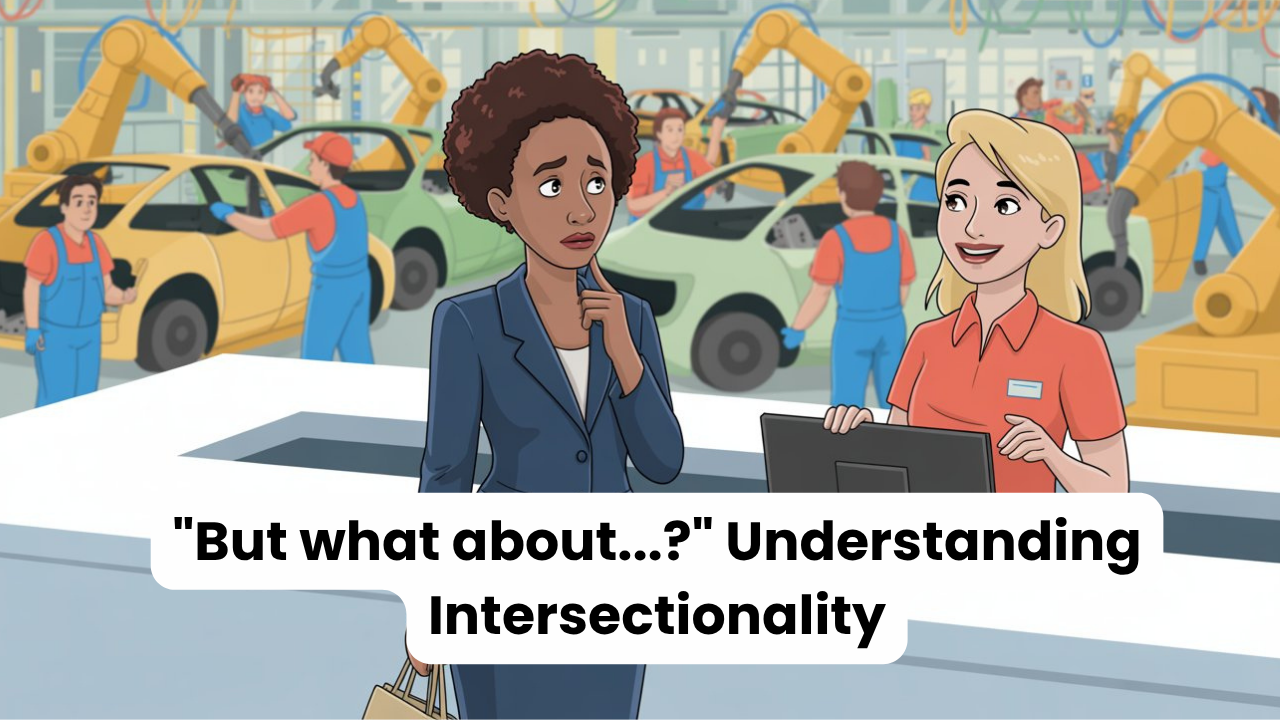
You may have heard this term floating about in recent years, as it has become popularised as more people have engaged in discussions about antiracism. But are you clear on its origins and true meaning?
The term was coined in 1989 by Dr Kimberlé Crenshaw, a Black American critical race scholar and activist. She found that there was often recognition within the law of gender and race discrimination, but there were no frameworks to recognise and discuss the unique form of discrimination when those two forms overlapped. These legal loopholes meant that the legal system was often failing Black women.
In a 2016 TED Talk, Crenshaw describes the incident that led her to create the theoretical framework (Crenshaw, 2016). Upon reading a legal opinion written by a judge, she came across the story of African American mother and wife Emma DeGraffenreid. Emma had applied for a job at a car manufacturing firm but was not given the position. She took the company to court, as she was certain the reason she did not get the job was that she was a Black woman. However, the judge dismissed her case, as the company hired African Americans and women. What the judge failed to recognise was that the Black people who did the manufacturing and maintenance jobs were all men, and the women who did the administrative jobs were all white women.
There was no framework to understand the double discrimination faced by Black women. Black women to this day face sexism and racism, and this combination makes it very unique. For instance, Black women often face discrimination based on the look of their natural hair. Black men, on the whole, tend to cut their hair short (so it is not as noticeably different). But fun is often made of afros. I have lost count of the number of times I have seen people donning afro wigs and finding it hilarious, creating a caricature of Black women’s identity. Hair is not just cosmetic; it is deeply tied to history, identity, and self-worth. Making fun of afros contributes to hostile environments where Black women are told, directly or indirectly, that their natural selves are ‘unprofessional’, ‘funny’, or ‘exotic’.
I digress.
Whilst the origins of the term ‘intersectionality’ came from the struggles of Black women, the term is now used to describe the unique forms of discrimination faced by people with overlapping marginalised identities and the institutional structures that enable their exclusion.
Disabled women are statistically at greater risk of gender-based violence, harassment, and abuse. Their disability can make them more vulnerable to exploitation, with perpetrators assuming they will not be believed if they disclose abuse. This adds a layer of fear and silencing that is specific to their intersection of gender and disability. Imagine what happens when their race is also factored into the mix.
Asian Muslim men are often stereotyped as aggressive, patriarchal, or controlling. Media and political rhetoric have reinforced these images, framing them as a ‘threat’ to British values. This results in heightened surveillance, mistrust, and the need to ‘prove’ they are not dangerous.
Trans women in general face disproportionately high rates of violence. For racially marginalised trans women, this risk can increase when racism and transphobia intersect, for example, being fetishised sexually while simultaneously being dehumanised.
Dr Kimberlé Crenshaw reminds us that intersectionality is not simply about who we are, but about how systems are organised: who is centred, who is marginalised, and who falls through the cracks. Applying intersectionality is therefore not just an academic exercise. It is a tool to design fairer workplaces, create laws and policies that truly protect everyone, and develop cultures where people are not forced to fragment or hide their identities to belong.
****
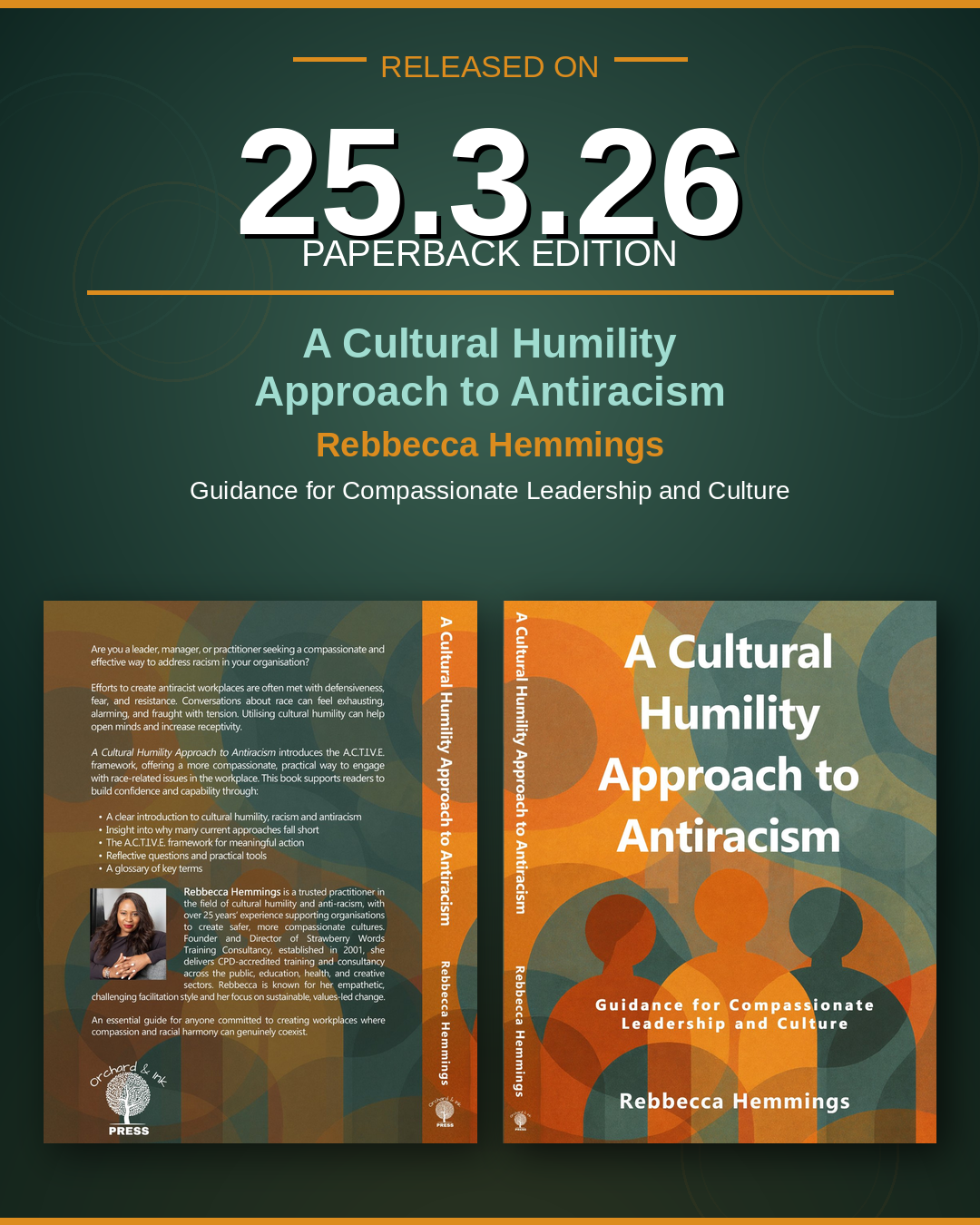
This excerpt is taken from my book "A Cultural Humility Approach to Antiracism - Guidance for Compassionate Leadership and Culture." It will be available to purchase from Amazon from 25th March 2026.
Talking about racism can seem difficult and uncomfortable. This CPD accredited course provides a foundational education on racism to help to increase racial literacy which includes building confidence to speak about and deal with issues concerning race. It provides a language through which meaningful conversation can take place (particularly in the workplace).
Stay connected with news and updates!
Join our mailing list to receive the latest news and updates from our team.
Don't worry, your information will not be shared.
We hate SPAM. We will never sell your information, for any reason.