From the Book Launch: Why Cultural Humility Matters in Antiracism Work
Jul 07, 2026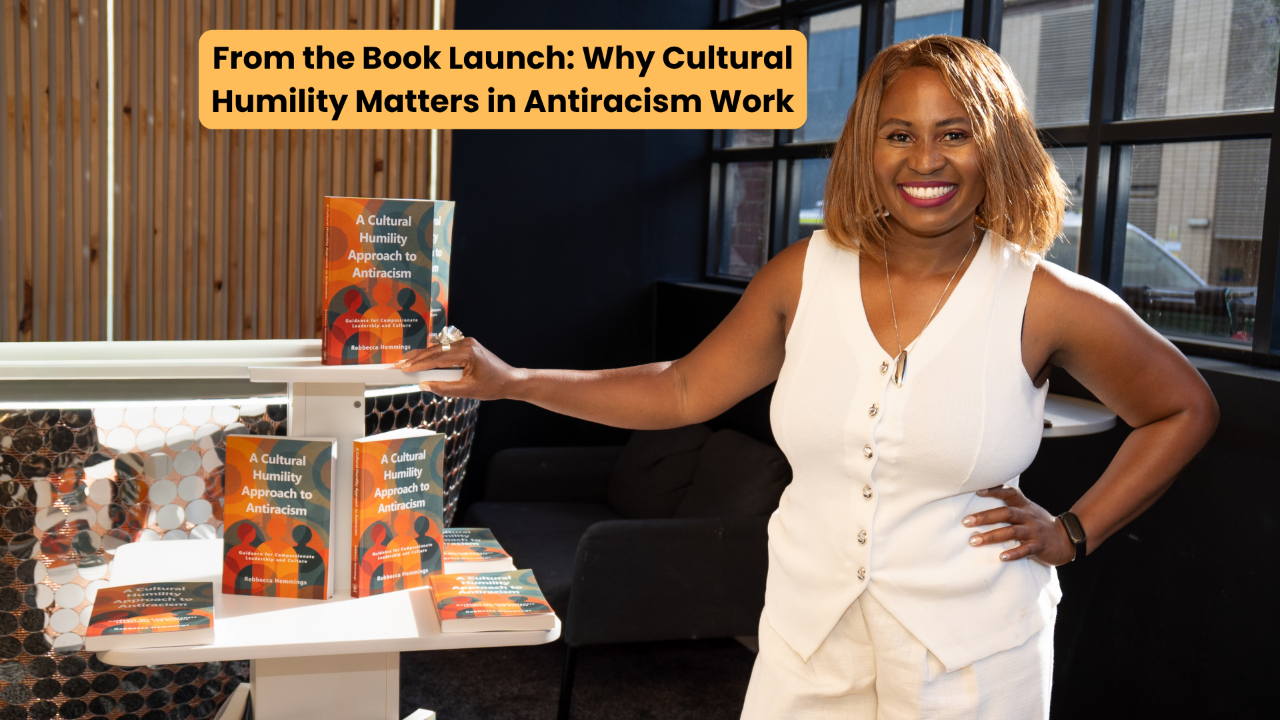
For those who missed my book launch earlier this month, held on what seemed like the world’s hottest day, so you are forgiven for non-attendance, here are a few of the comments I shared with host Tonia Daley-Campbell.
- What inspired you to write the book?
During the Black Lives Matter movement in 2020, we received many requests for antiracism training. It was quite surprising to receive calls from universities, councils and theatres asking for training on unconscious bias, microaggressions and white privilege.
I quickly found myself writing an online course to cope with the demand. After a while, I had written so much content, driven by my insatiable thirst for questions around these phenomena, that I knew one day it would need to be housed in a book.
Equally, I found that when delivering training, which would often happen over one or two days, there would be offshoots of conversations that were never completed because we had to move on. Yet those conversations often led to deeper learning.
Then, when I discovered the concept of cultural humility, a framework for dealing with and challenging discrimination that is ultimately rooted in love, I knew immediately that this was the architecture that would house my work around antiracism. It made sense, as my company, Strawberry Words, already led with the shared values of compassion, self-reflection and ongoing learning.
The desire to let the world know that there was a framework for discussing racism in a more holistic way, one that invited everyone to explore their own and others’ cultures and identities, propelled me to my writing desk.
- For those who are new to the term, what is cultural humility and how does it differ from traditional diversity education methods?
Cultural humility is a concept created by two African American doctors, Dr Jann Murray-García and Dr Melanie Tervalon. They were frustrated with the way cultural competence training could lead to harmful stereotypes, unhelpful fixed views of communities and a lack of ongoing work.
In simple terms, cultural humility is a lifelong commitment to self-reflection, learning about different cultures, and educating yourself on the systemic barriers that affect marginalised people. Dr Tervalon says simply:
“More than a concept, Cultural Humility is a communal reflection to analyse the root causes of suffering and create a broader, more inclusive view of the world.”
Though our work has always been rooted in compassion and respect for all, cultural humility helped to push the boundaries even further. As trainers, we were quite excited when we saw participants happily engaging in conversations about their own cultures, then listening keenly to the stories of others. That helped to pave the way for more difficult conversations.
Often, people came to our training sessions, at Birmingham City Council where we first created and delivered this training, not knowing what cultural humility was. But they came with open curiosity.
- If someone reads just one chapter and takes one action afterwards, what would you hope that action would be?
Easily, it would be the chapter, “Introducing the A.C.T.I.V.E Framework.” This is a framework I created through our antiracism and antidiscrimination work with organisations.
I had studied DEI benchmarks and reports from organisations that were successful in this work. I had witnessed the wins from organisations we have worked with, such as Birth Companions making racial safeguarding part of policy, and Birmingham Hippodrome Theatre committing all staff to study our online learning on an annual basis.
The roadmap to doing DEI work meaningfully, and making it impactful in a compassionate way, was etched in my mind.
In short, A.C.T.I.V.E. stands for:
Act With Intention
Challenge Comfort Zones
Take Care
Introspect Deeply
Validate Lived Experience
Educate Consistently
In the book, each of these actions is laid out clearly to help organisations become better at diversity and inclusion. While everything written is important, this chapter is vital to getting the work done.
- For leaders who genuinely want to create more compassionate cultures but feel nervous about getting it wrong, what advice would you give them?
Start slowly and read the book. The book is your friend and will help you improve your racial literacy without blame or shame. It’s not about being perfect (no one can be), it about continuing to use your influence and power to ensure everyone feels welcome and a sense of belonging in the workplace.
You can get your copy of the book here: https://tinyurl.com/2pfz4msj
For a discount on bulk orders, email us at: [email protected]
I am also available for talks, interviews and conversations around the themes explored in the book, including cultural humility, antiracism, compassionate leadership and creating safer, more inclusive organisational cultures. If you would like me to speak at your event or with your team, please do get in touch.
Talking about racism can seem difficult and uncomfortable. This CPD accredited course provides a foundational education on racism to help to increase racial literacy which includes building confidence to speak about and deal with issues concerning race. It provides a language through which meaningful conversation can take place (particularly in the workplace).
Stay connected with news and updates!
Join our mailing list to receive the latest news and updates from our team.
Don't worry, your information will not be shared.
We hate SPAM. We will never sell your information, for any reason.